
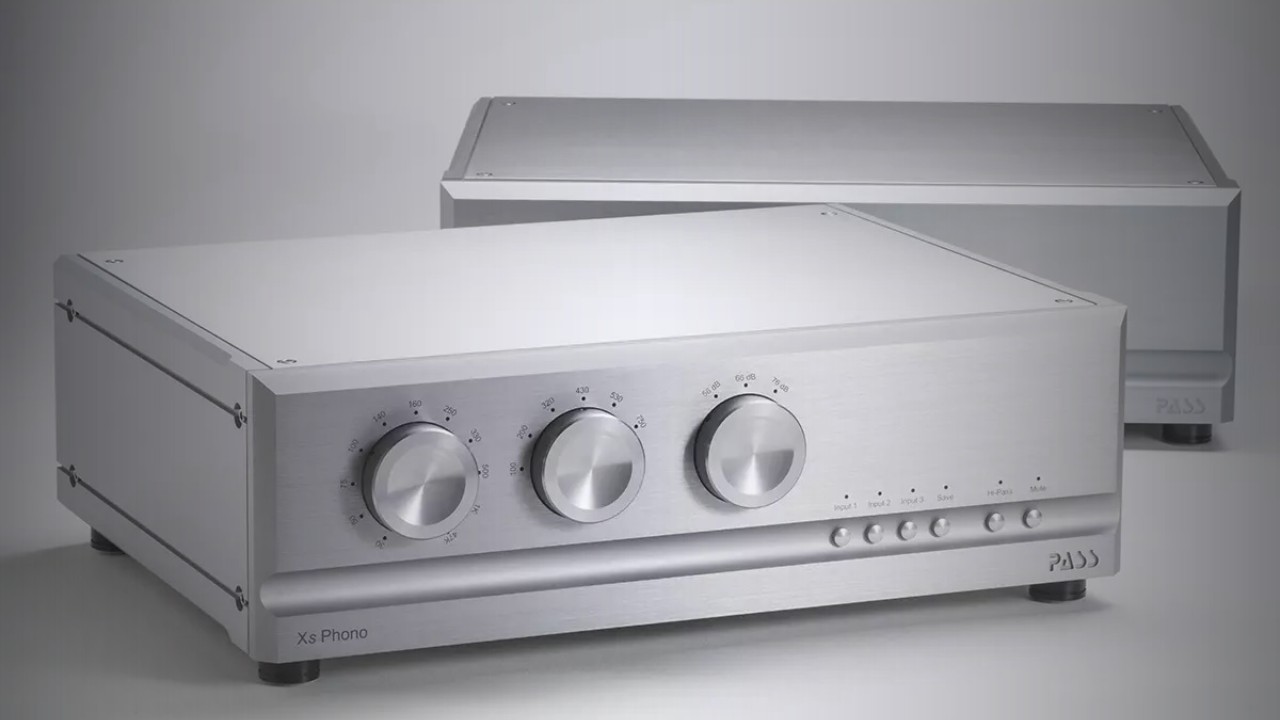
A phono stage has a deceptively difficult job. It must take the extremely small signal produced by a cartridge, apply the correct equalization, add substantial gain, and do so without adding noise or upsetting the character of the cartridge and tonearm feeding it. The Pass Labs Xs Phono is designed around that challenge at a very ambitious level. Positioned within the company’s Xs series, it is a two-chassis phono amplifier with support for both moving magnet and moving coil cartridges, extensive gain and loading flexibility, and a construction approach that prioritizes channel independence and power-supply isolation. At $54,500, it is clearly aimed at highly developed analog systems rather than casual vinyl playback, but its appeal lies in how thoroughly it addresses the practical and electrical demands of top-tier record replay.
A phono amplifier designed as a system component, not an accessory
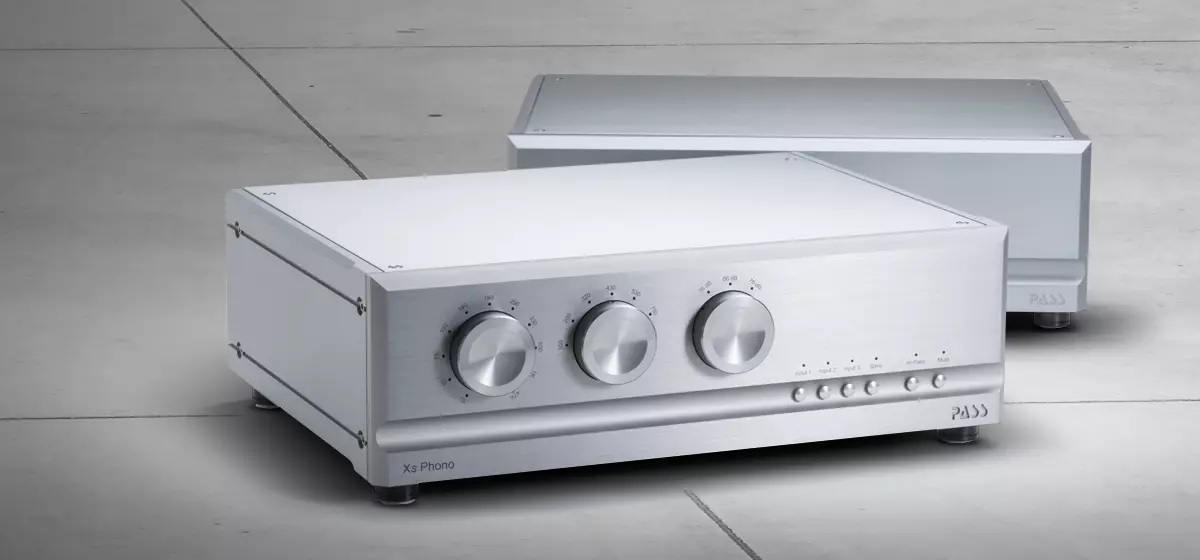
The Xs Phono is not presented as a compact add-on for a turntable. It is a substantial component in its own right, supplied as two separate enclosures: one for the phono amplifier and one for the power supply cabinet. Each enclosure measures 482.6 x 355.6 x 158.7 millimeters, and the total weight is listed at 36.3 kilograms. Those figures matter because they indicate a product conceived for full-size high-end equipment racks and permanent installation within a serious system.
This physical scale is tied to the product’s design brief. Pass Labs describes the Xs Phono as one of its most intensive design efforts, despite the brand’s general emphasis on simplicity. The apparent contradiction is central to the product’s identity: the circuit approach is intended to remain fundamentally direct, while the execution uses a large parts count and extensive separation to support performance with very low-level cartridge signals. The source material notes roughly 1,500 components in the circuits, a reminder that simplicity in topology does not always mean minimal construction.
Separate power supply architecture for lower interference
One of the most distinctive aspects of the Xs Phono is its dedicated outboard power supply. Separating the power supply from the amplification circuits is a familiar high-end technique, but here it is implemented with unusual emphasis on independence between channels. The product is essentially a true dual-mono design: each channel has its own power supply, and the two supplies are housed in separate enclosures within the power supply arrangement. Each channel also has its own transformer.
The only element described as being shared between channels, apart from the enclosure, is the power cable to the wall socket. Even the control section has its own regulated power supply. This matters because phono amplification is especially sensitive to hum, noise, and crosstalk. A moving coil cartridge can deliver an extremely small signal, and the gain required to bring that signal up to line level can also magnify unwanted electrical artifacts. By giving each channel its own supply structure and transformer, the Xs Phono is engineered to reduce opportunities for interaction between left and right channels and between power and signal sections.
Pass Labs states that this strict independence, from power cord through to the output connectors, is intended to support minimum noise and maximum channel separation. Those are not merely abstract specifications in a phono stage. Lower noise can help preserve usable dynamic range from quiet record grooves, while stronger channel separation can be important for stereo imaging and spatial information encoded in vinyl pressings. The practical benefit for an owner is that the phono stage is designed to avoid becoming the limiting factor in an otherwise ambitious analog chain.
MM and MC flexibility across three inputs
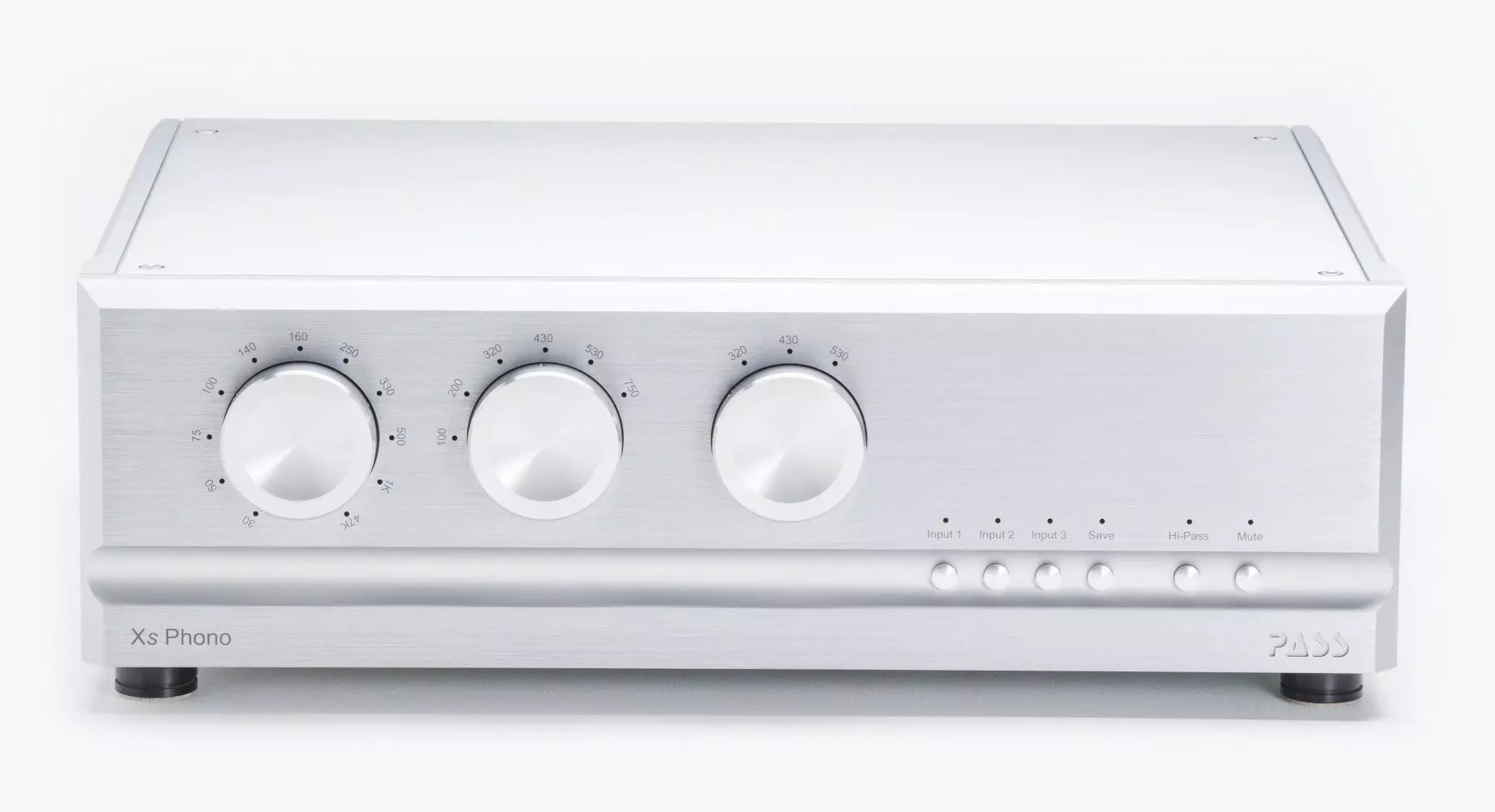
The Xs Phono supports both moving magnet and moving coil cartridges, which immediately broadens its relevance. MM and MC designs present different gain and loading requirements, and many serious vinyl users may own multiple tonearms, cartridges, or turntables. Rather than being optimized for one narrow cartridge type, the Xs Phono is equipped to accommodate a wider range of setups.
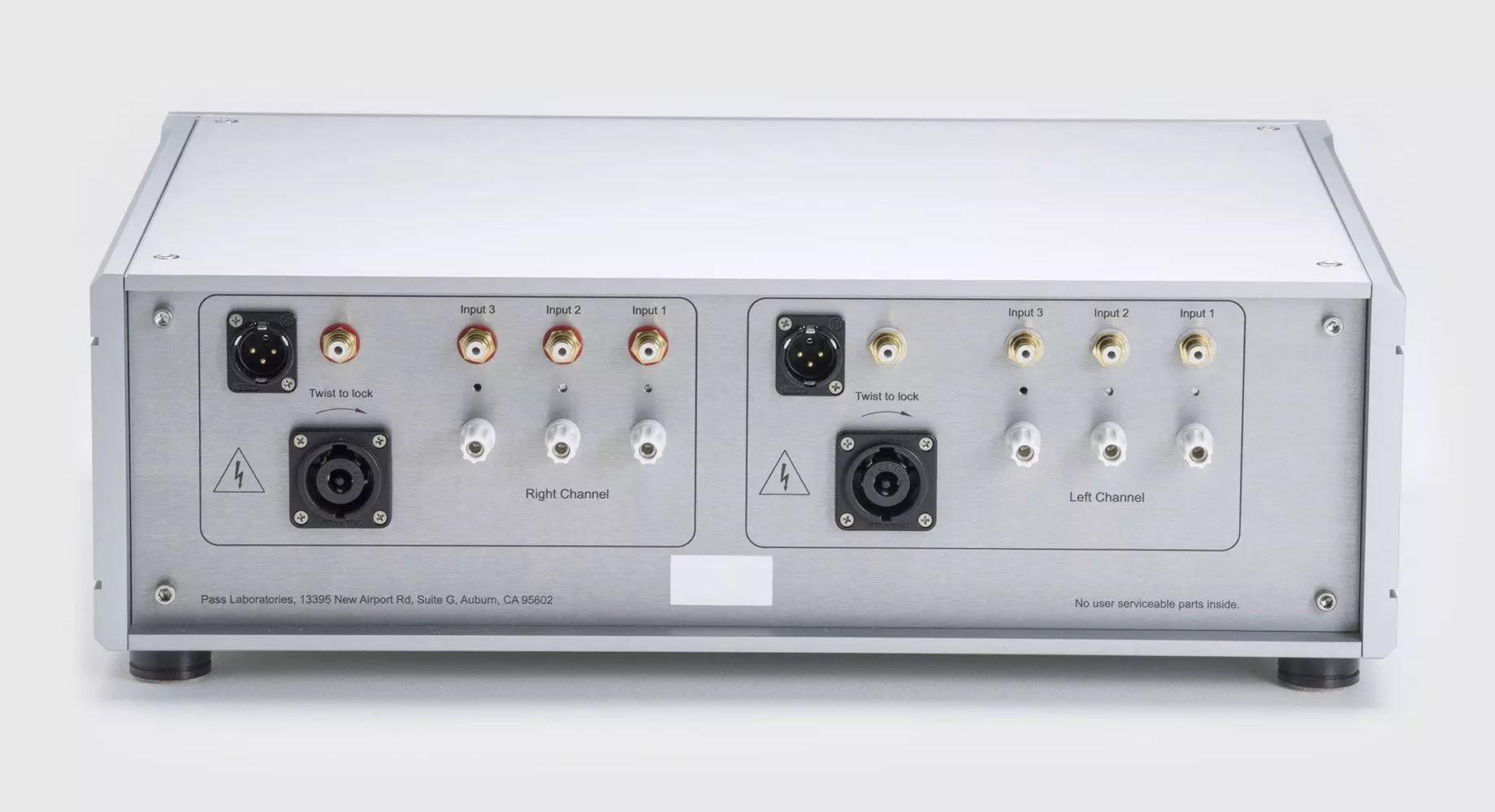
Its three RCA inputs are particularly useful in that context. A system with more than one cartridge can be managed without constantly unplugging delicate interconnects or changing the back of the rack. For collectors who use different cartridges for different records, or for listeners who maintain separate mono and stereo setups, three inputs can make the analog front end more practical to live with. The source material specifies that each of the three inputs uses two printed circuit boards for signal electronics, making six signal-electronics boards in total. This reinforces the impression that the input flexibility is not a convenience feature added casually; it is built into the internal architecture at a substantial level.
Input impedance is adjustable between 30 ohms and 47k ohms on each input. That range is important because cartridge loading can affect how a cartridge behaves electrically. Moving coil cartridges in particular often require careful impedance matching, while 47k ohms is the standard region typically associated with moving magnet use. Having this loading range available per input allows the Xs Phono to be configured around specific cartridges rather than forcing a single compromise.
Gain options for a wide range of cartridges
The Xs Phono provides three gain settings: 56 dB, 66 dB, and 76 dB. This is one of the most important practical specifications for a phono amplifier. Too little gain can leave a system sounding under-driven or require excessive volume control use downstream; too much gain can reduce usable volume range and increase the audibility of noise. By offering three clearly spaced gain values, the Xs Phono can be aligned with cartridges of different output levels and with the gain structure of the rest of the system.
The 56 dB setting may be relevant where less gain is required, while 66 dB and 76 dB extend its usefulness into lower-output moving coil territory. The point is not simply that the numbers are high, but that the owner or installer has meaningful choices. In an analog system, cartridge output, preamplifier input sensitivity, amplifier gain, and speaker sensitivity all interact. A phono stage with multiple gain options gives more room to optimize that chain.
RIAA accuracy and output capability
The published RIAA response is specified at plus or minus 0.1 dB from 20 Hz to 20 kHz. RIAA equalization is fundamental to vinyl playback: records are cut with standardized equalization, and the phono stage must apply the inverse curve during playback. Tight RIAA accuracy helps ensure that tonal balance is not shaped unpredictably by the phono amplifier itself. For a product at this level, that precision is an important part of its technical case.
Distortion is specified as less than 0.005 percent THD with a 1 mV MC input. Maximum output is listed at 38 volts rms balanced at 0.1 percent THD, while output impedance is 150 ohms for both RCA and XLR outputs. The presence of both single-ended and balanced output options is significant for system integration. Balanced XLR connections can be useful in systems with long cable runs or components designed around balanced inputs, while RCA remains widely compatible with traditional preamplifiers and integrated amplifiers.
The 150-ohm output impedance figure for both connection types suggests the Xs Phono is intended to drive downstream line stages with confidence. Again, the value for prospective owners is not in one number alone, but in the way the product is specified for integration into large, high-performance systems where cable choice, connection format, and gain structure all matter.
Industrial design and finish choices
The Xs Phono’s housing is made from aluminum, consistent with its role as a premium component. The standard finish is not expanded upon in the supplied information, but a black housing option is available for an additional $950. That may seem like a small detail relative to the overall product, yet finish options matter in high-end systems where equipment is often displayed in dedicated listening rooms and paired with visually substantial amplifiers, preamplifiers, and source components.
Because the Xs Phono uses two enclosures, visual integration is more important than it would be for a single compact phono box. Owners will need space for both chassis and suitable cable routing between the power supply and amplifier sections. The design therefore suits installations where component placement, ventilation, and accessibility have already been considered.
Who the Pass Labs Xs Phono is most suitable for
The Xs Phono is best understood as a specialist component for deeply committed vinyl listeners with high-value analog front ends. It is most suitable for systems that can take advantage of its architecture: multiple cartridges or tonearms, low-output moving coil cartridges, balanced downstream electronics, and a listening environment where low noise and channel separation are priorities. Its three inputs, adjustable gain, broad input impedance range, and dual output formats make it especially attractive for owners who want flexibility without treating the phono stage as a weak link.
It is less suitable for someone seeking a compact, simple, or cost-conscious way to connect one turntable to an amplifier. The two-box construction, 55-watt power consumption, large chassis dimensions, and $54,500 price place it firmly in the realm of statement analog hardware. It also requires a system context where its design choices make sense. A modest turntable and cartridge are unlikely to justify the scale or ambition of the Xs Phono. For the right owner, however, the appeal is clear: it is designed to support complex and highly optimized vinyl setups rather than merely provide basic phono amplification.
Conclusion
The Pass Labs Xs Phono stands out for its thorough approach to the difficult task of amplifying cartridge-level signals. Its two-chassis construction, dual-mono power supply arrangement, separate transformers, dedicated control power supply, three RCA inputs, MM/MC compatibility, adjustable loading, and gain choices of 56, 66, and 76 dB all point to a phono stage built for serious analog flexibility. Add precise published RIAA response, RCA and XLR outputs, substantial aluminum construction, and a black finish option, and the result is a product aimed squarely at owners of ambitious vinyl systems. It is not a universal solution for every record listener, but for those managing multiple cartridges and seeking a highly configurable high-end phono stage, the Xs Phono’s documented strengths are both practical and distinctive.


Join the discussion
Share your thoughts, listening impressions or product experience.