
Choosing a digital-to-analog converter begins with deciding what the component must do.
Some models here concentrate solely on conversion, while others add headphone amplification, volume control, Bluetooth, streaming or room correction.
Those differences can matter more than headline format support when a DAC is placed into an existing system. This curated selection spans pocketable adapters, desktop converters and ambitious full-size components. It also covers several conversion approaches, including conventional dual-DAC arrangements, resistor-ladder designs and proprietary discrete 1-bit processing. The aim is not to treat unlike products as direct rivals, but to clarify the role each one is designed to fill. Before choosing, check the required inputs, output type and control arrangement. A fixed-output DAC suits a system that already has a preamplifier, whereas a variable-output model may connect directly to powered speakers or a power amplifier. Headphone users should also confirm that amplification is built in rather than assuming every DAC can drive headphones.
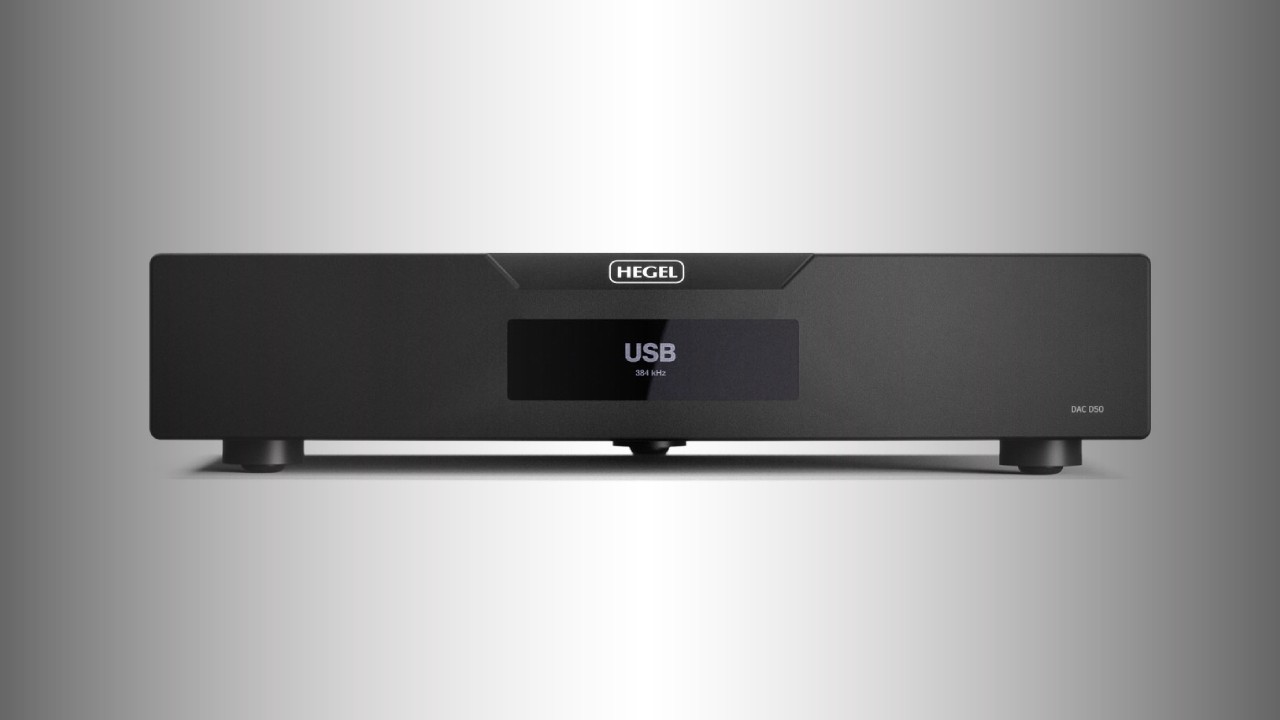
1. Hegel D50: Powerful DAC nicknamed The Raven
Hegel D50 The Raven, a dedicated DAC built around separated power supplies and a streamlined feature set.
Hegel takes a deliberately focused approach with the D50, also known as The Raven.
It omits streaming and volume adjustment to concentrate on digital-to-analog conversion, making it most relevant to systems that already have source management and level control.
Its power architecture uses two low-noise toroidal transformers, separately serving digital and standby functions on one side and analog plus sensitive digital circuitry on the other. Steel shielding and additional interference-control measures reinforce the purist design brief, although Hegel's claims about effects on other equipment sharing the circuit will depend on installation conditions.
Best for: Purist systems with an existing preamplifier or integrated amplifier
- Conversion-only design avoids redundant streaming and volume features
- Separate toroidal transformers serve different circuit sections
- Shielded power architecture is designed to reduce interference
Verdict: The D50 is the focused choice for listeners who want Hegel's dedicated conversion and power-supply approach without extra source or control functions.

2. Musical Fidelity M6x DAC: Flagship DAC with ESS 32 Bit HyperStream technology
Musical Fidelity M6x DAC, featuring dual-mono ESS conversion, multiple digital inputs and balanced analog outputs.
The Musical Fidelity M6x DAC combines a differential dual-mono implementation of two ES9038Q2M converters with optimized signal paths and a filtered toroidal power supply.
USB-B provides the broadest format compatibility, accepting PCM up to 32-bit/768 kHz and DSD512, while its optical and AES/EBU inputs support PCM up to 24-bit/192 kHz.
Switchable upsampling, updated digital filters, reclocking and MQA processing provide several ways to manage incoming digital audio. Buffered RCA and balanced XLR outputs, along with a built-in headphone amplifier, make it suitable for both speaker and headphone systems.
Best for: Full-size systems requiring broad format support and balanced outputs
- Differential dual-mono ES9038Q2M conversion
- USB supports PCM up to 32-bit/768 kHz and DSD512
- Balanced XLR and unbalanced RCA outputs
- Built-in headphone amplifier
Verdict: The M6x DAC is a feature-rich full-size converter for systems that can use its extensive processing options, output flexibility and headphone stage.
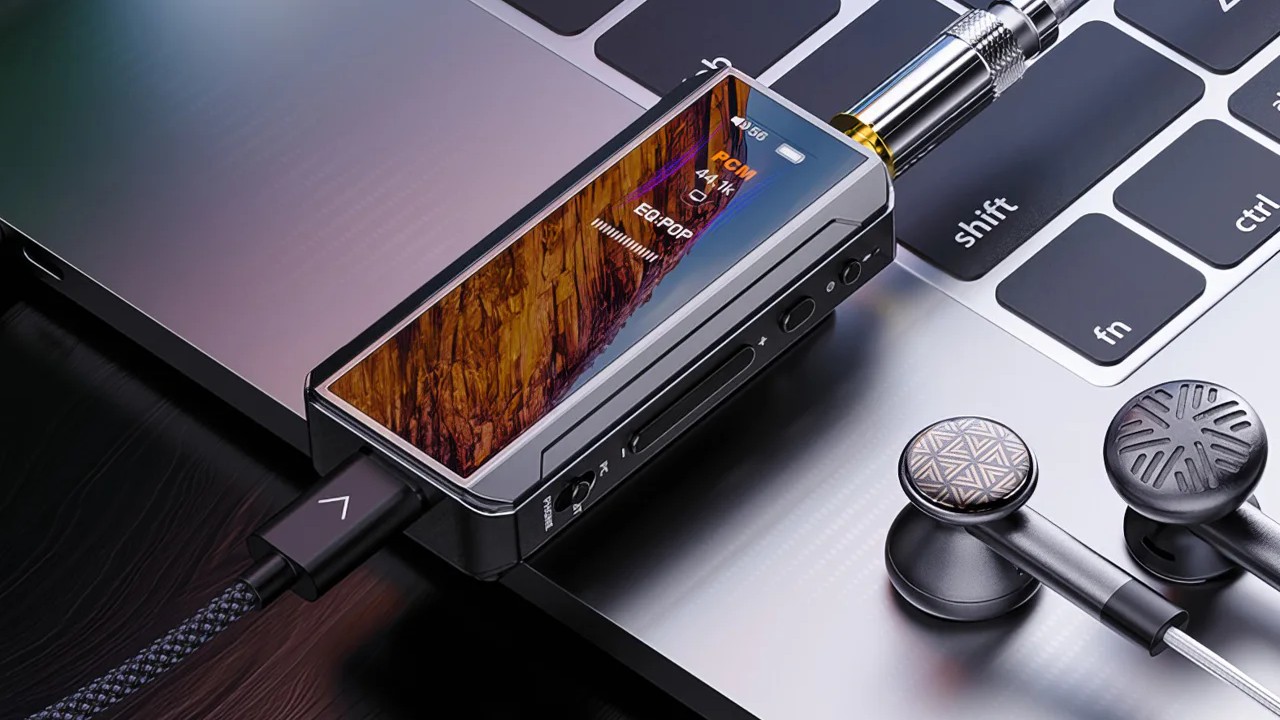
3. FiiO unveils BTR13 DAC and Headphone Amplifier
FiiO BTR13 portable DAC and headphone amplifier with selectable operating modes and two headphone connections.
FiiO's BTR13 is designed to move easily among computer, smartphone and wireless listening duties.
A three-position switch selects PC, Bluetooth or phone operation, while 3.5 mm and balanced 4.4 mm headphone connections accommodate different cable arrangements.
Two CS43131 DACs provide separate conversion for the left and right channels, and the Qualcomm QCC5125 Bluetooth platform supports LDAC alongside other listed codecs. A global parametric equalizer, adjustable through an app or web interface, adds a level of tuning not commonly associated with a simple audio adapter.
Best for: Portable headphone listening across phones, computers and Bluetooth sources
- Dedicated PC, Bluetooth and phone operating modes
- Both 3.5 mm and balanced 4.4 mm headphone outputs
- Dual CS43131 DAC configuration
- App- and web-adjustable parametric equalizer
Verdict: The BTR13 stands out as a flexible compact DAC and headphone amplifier with wired, wireless and equalization options.
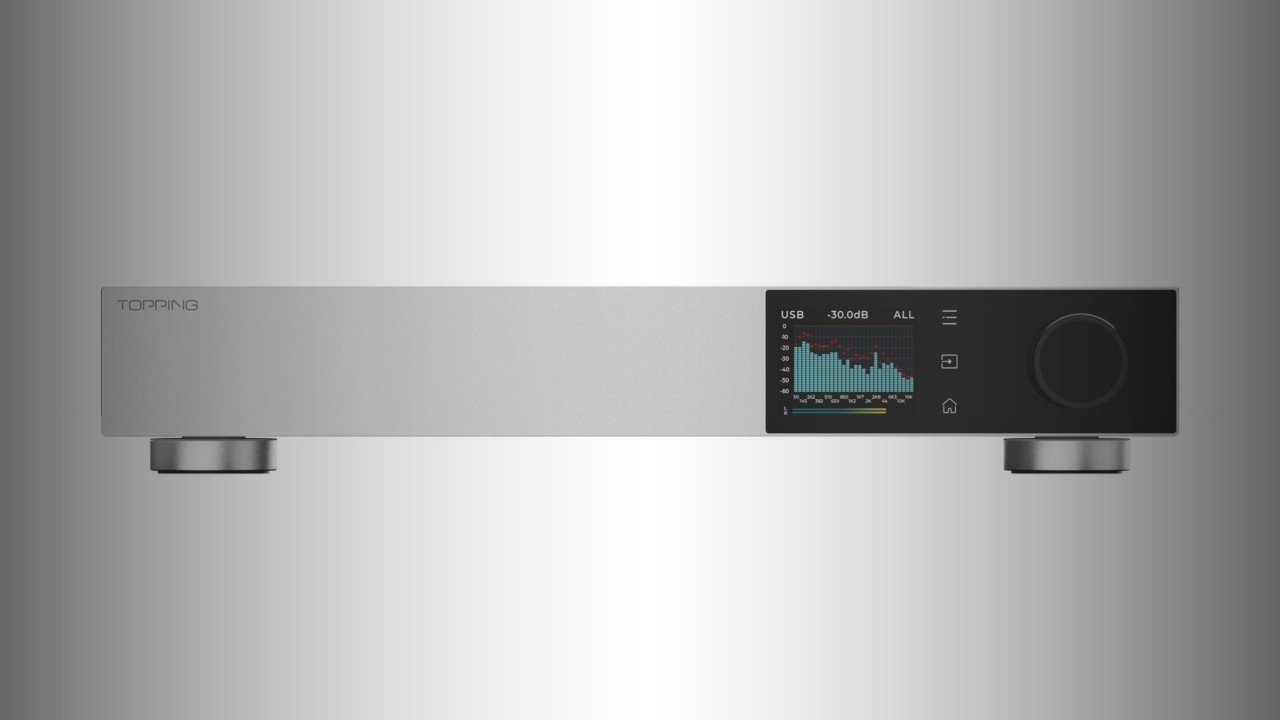
4. Topping D900: $1,800 Flagship DAC With Discrete 1-Bit PSRM Technology and True High-End Build
Topping D900, a full-size DAC built around proprietary discrete 1-bit PSRM conversion.
The D900 departs from Topping's more conventional chip-based DAC designs by using the company's proprietary discrete 1-bit Precision Stream Reconstruction Matrix conversion system.
This makes it the technically distinctive option in the selection, particularly for buyers interested in an alternative to familiar ESS or AKM implementations.
The full-size chassis uses three-millimeter aluminum panels, an eight-millimeter front panel and finned sides. Even the supplied remote is machined from aluminum rather than using plastic with a metallic finish, underlining the attention given to physical construction.
Best for: Buyers interested in discrete 1-bit conversion and substantial construction
- Proprietary discrete 1-bit PSRM conversion
- Substantial aluminum chassis construction
- Machined aluminum remote control
Verdict: The D900 pairs Topping's unconventional PSRM architecture with a notably robust full-size enclosure and remote.

5. The Best Portable DACs of -: Pocket Hi-Fi Done Right
A portable-DAC guide focused on compact adapters for connecting wired headphones to phones and computers.
This source is a broader portable-DAC guide rather than an article about one model, so it serves a different purpose from the individual recommendations around it.
Its focus is the modern dongle DAC as a compact bridge between phones, laptops or desktop computers and wired headphones, particularly as built-in headphone sockets become less common.
The guide begins with the FiiO KA11 and goes on to consider portable DAC and amplifier options across different levels. It is the relevant entry for readers who want to compare several pocket-sized choices before committing to a specific device.
Best for: Readers comparing portable dongle DACs rather than one desktop component
- Covers multiple portable DAC and amplifier options
- Focuses on wired headphone use with modern source devices
- Includes compact choices intended for pocketable use
Verdict: This roundup is a useful starting point for understanding the portable-DAC category, though it is not a single-product recommendation.

6. Topping D50 III: Compact DAC with Bluetooth 5.1
Topping D50 III compact desktop DAC with Bluetooth, USB-C connectivity and software-based equalization.
Topping's D50 III brings together desktop-friendly dimensions, high-resolution USB conversion and Bluetooth reception.
Its dual ES9039Q2M arrangement assigns one converter to each channel, while the XMOS XU-316 USB interface supports PCM up to 32-bit/768 kHz and DSD512.
Coaxial, optical and USB-C inputs are joined by RCA and balanced 6.35 mm TRS outputs. Volume control allows the unit to operate as a DAC or preamplifier, and its ten-band equalization software supports imported target curves and saved profiles.
Best for: Compact desktop systems needing Bluetooth, volume control and equalization
- Dual ES9039Q2M converters with one chip per channel
- USB support for PCM up to 32-bit/768 kHz and DSD512
- Bluetooth with aptX Adaptive, aptX HD and LDAC support
- Ten-band equalization with saved profiles
Verdict: The D50 III is a versatile desktop hub for users who value wireless reception, configurable EQ and preamplifier operation.
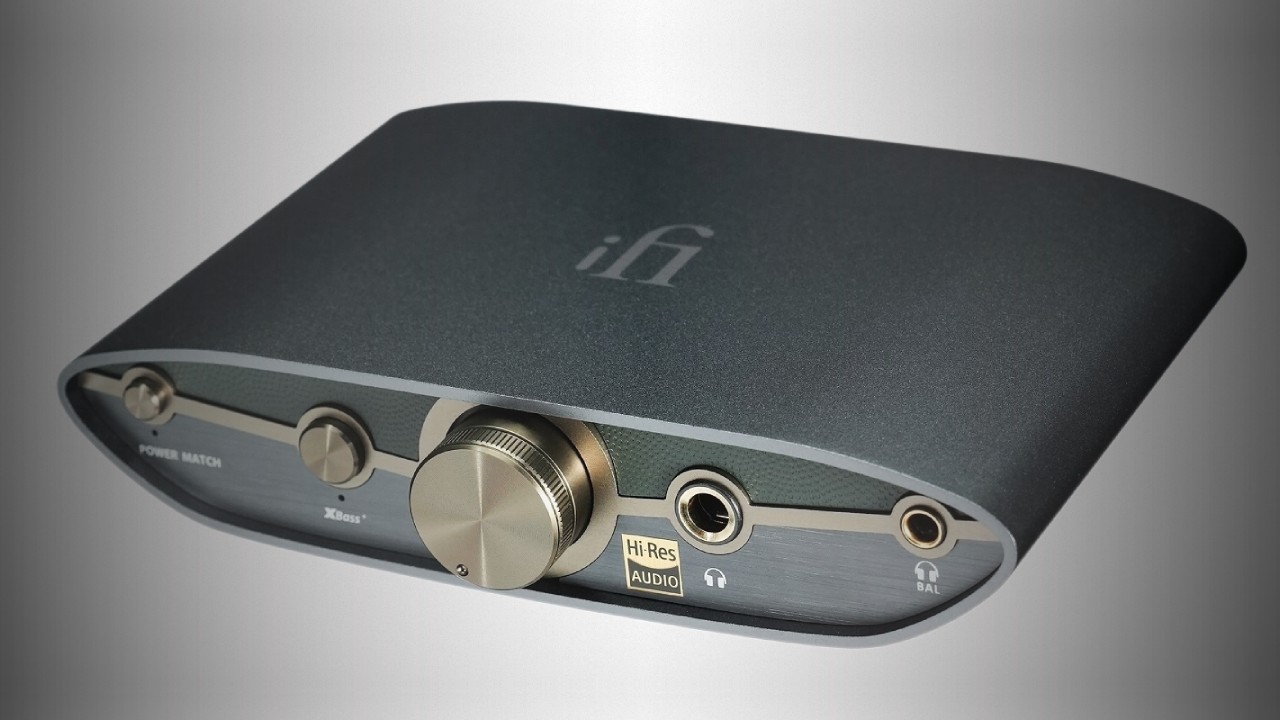
7. iFi Zen Dac 3: DA converter and headphone amplifier
iFi Zen Dac 3, a USB-C DAC and headphone amplifier with balanced and RCA analog connectivity.
The iFi Zen Dac 3 is primarily suited to desktop use, combining USB-C digital input with headphone amplification and line-level connectivity.
Its front panel offers a balanced 4.4 mm headphone output, while the rear provides another balanced connection for hi-fi equipment alongside stereo RCA outputs.
It accepts PCM up to 32-bit/768 kHz and DSD512, and includes MQA decoding. PowerMatch and XBass+ offer user-adjustable amplification and analog processing, while improved DC-offset and USB-C surge protection address practical connection concerns.
Best for: USB-C desktop headphone systems that may also feed speakers
- Balanced 4.4 mm headphone and rear-panel connections
- PCM up to 32-bit/768 kHz and DSD512 support
- PowerMatch and XBass+ adjustment modes
- Can feed an amplifier or active speakers
Verdict: The Zen Dac 3 is a practical desktop choice when headphone amplification and flexible balanced or unbalanced analog connections are both required.
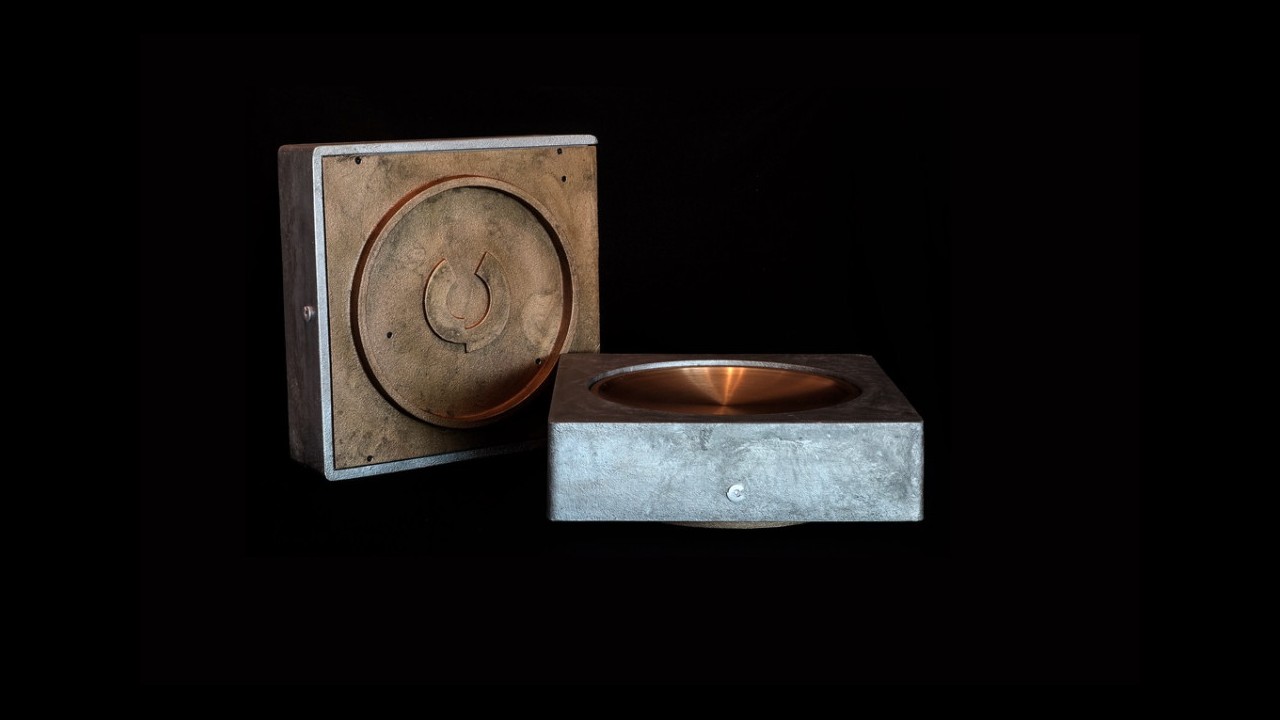
8. Cinnamon Galle: Might be the most unique DAC you have ever seen
Cinnamon Galle DAC, combining a precision resistor ladder with a minimally finished bronze and aluminum alloy enclosure.
Cinnamon's Galle combines an unconventional conversion circuit with an equally unusual enclosure.
Rather than relying on an off-the-shelf DAC chip, it uses a dual-mono, quasi-non-oversampling architecture based on a 27-bit differential resistor ladder containing 430 precision resistors.
USB accepts DSD256 and PCM up to 24-bit/384 kHz, while the RCA S/PDIF input supports PCM up to 24-bit/192 kHz. Its cast bronze and aluminum alloy housing receives minimal finishing, so variations in surface texture and appearance are an intentional consequence of the manufacturing method.
Best for: Systems where unconventional resistor-ladder engineering and distinctive industrial design are priorities
- Dual-mono 27-bit differential resistor-ladder design
- Quasi-non-oversampling conversion architecture
- USB supports DSD256 and PCM up to 24-bit/384 kHz
- Individually varied cast bronze and aluminum alloy enclosure
Verdict: The Galle offers an unusual combination of custom resistor-ladder conversion and a cast enclosure whose appearance varies from unit to unit.
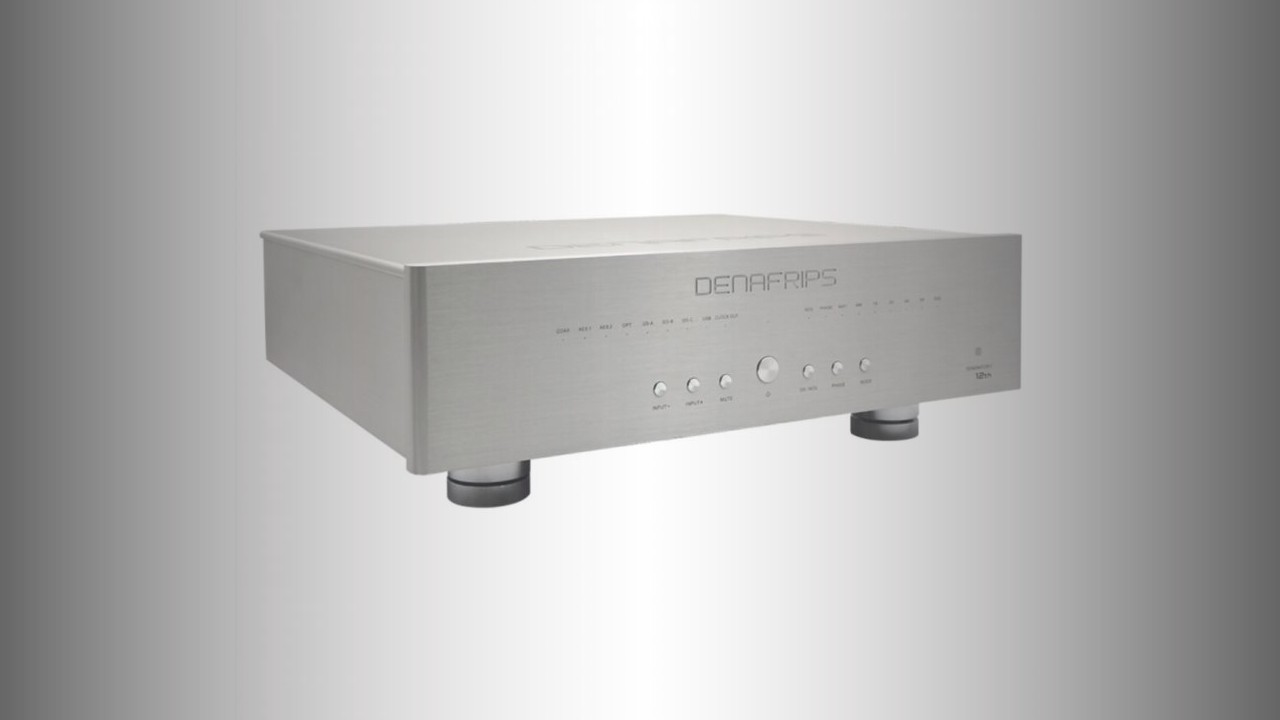
9. Denafrips Terminator II 12Th: High-performance, balanced R2R NOS DAC
Denafrips Terminator II 12Th balanced R2R DAC with multiple I2S inputs and separated power-supply sections.
The Denafrips Terminator II 12Th is a balanced R2R converter with non-oversampling operation and an extensive set of digital connections.
Inputs include USB-B, several I2S implementations, AES/EBU, optical and coaxial, while analog output is available through RCA and balanced XLR.
Its linear power section sits beneath the DAC board and is separated by a steel partition, with two O-Core toroidal transformers assigned to digital and analog sections. FPGA processing handles I2S and S/PDIF signals, and two OCXO clocks are installed for the relevant digital frequency families.
Best for: Complex high-end systems requiring R2R conversion and extensive digital connectivity
- Balanced R2R non-oversampling architecture
- Broad input selection including multiple I2S connections
- Separate digital and analog power transformers
- RCA and balanced XLR outputs
Verdict: The Terminator II 12Th is the system-oriented R2R option, distinguished by its input range, separated power architecture and clocking provision.
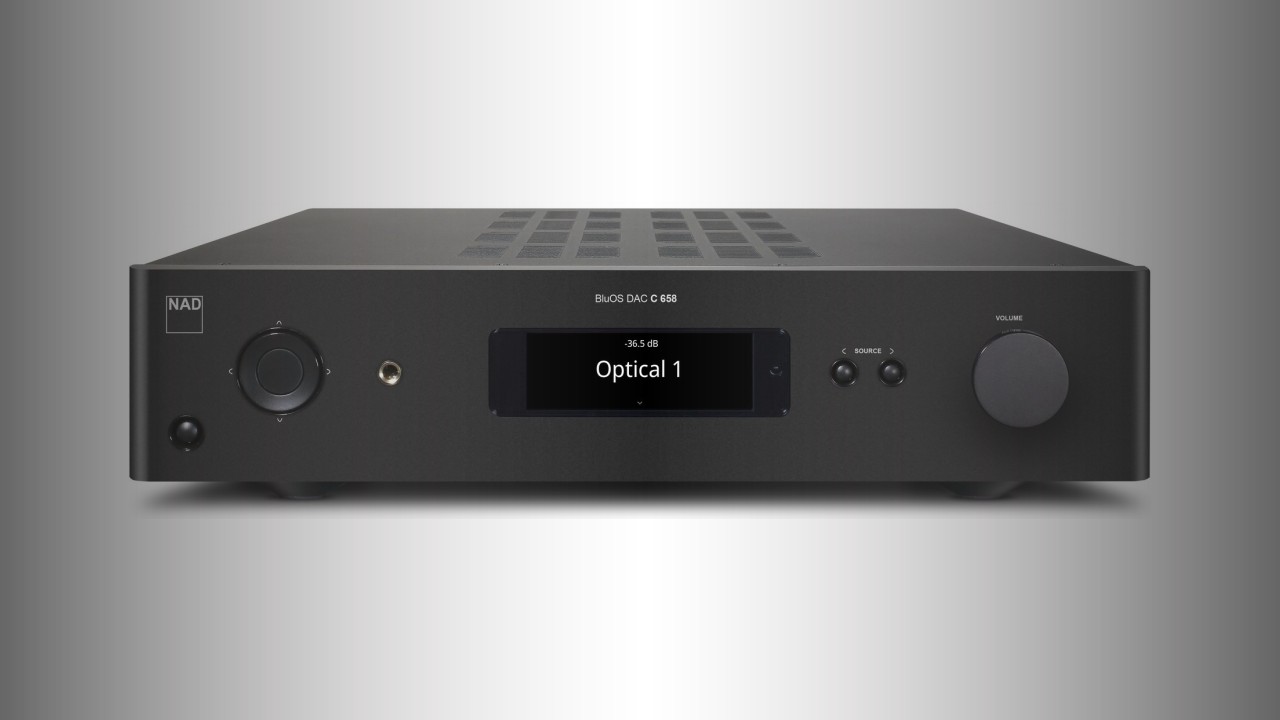
10. NAD C658: Modular BluOS Streamer, DAC & Preamp with Dirac Live Room Correction and MQA Support
NAD C658 network component integrating BluOS streaming, DAC conversion, preamplification and Dirac Live room correction.
The NAD C658 extends well beyond basic conversion by combining a DAC, preamplifier and BluOS network streamer.
BluOS provides access to supported online services, internet radio and local music libraries, with file support up to 32-bit/192 kHz and MQA.
It can also link with other BluOS players, while AirPlay 2 adds streaming from Apple devices and multiroom functionality. Dirac Live room correction and the C658's modular design further distinguish it from conversion-only alternatives, making it a potential control center rather than merely another digital source component.
Best for: Streaming-led systems needing preamplification and room correction in one component
- Combines DAC, preamplifier and BluOS streamer
- Supports local and online music through the BluOS platform
- AirPlay 2 and BluOS multiroom connectivity
- Includes Dirac Live room correction
Verdict: The C658 is the broadest system hub in the selection, combining conversion with streaming, level control, multiroom support and room correction.
Frequently asked questions
Should I choose a dedicated DAC or a DAC with preamplifier functions?
Choose a dedicated fixed-output DAC if your integrated amplifier or preamplifier already handles volume.
A variable-output DAC such as the Topping D50 III can simplify a system by connecting to powered speakers or a power amplifier, while the NAD C658 adds broader source and streaming control.
Does every DAC include a headphone amplifier?
No.
The Hegel D50 is deliberately focused on conversion, whereas the FiiO BTR13, Musical Fidelity M6x DAC and iFi Zen Dac 3 include headphone amplification.
Check both the presence of a headphone output and whether its connector matches your cable.
Which connections should I check before buying a DAC?
Match the DAC to every intended source and amplifier.
USB is important for computers and many mobile devices, optical and coaxial inputs suit common digital transports, balanced XLR or TRS outputs may be useful with compatible amplifiers, and I2S compatibility requires particular care because connector formats vary.
Are maximum PCM and DSD figures the most important specifications?
Not necessarily.
Format support matters only if your source material and playback software use those formats.
Input selection, fixed or variable output, headphone support, wireless connectivity, streaming and physical system compatibility are often more consequential in everyday use.
How to choose the right DAC for your system
Start with the role the DAC will perform.
For a conventional hi-fi system with an established amplifier and source, a focused converter such as the Hegel D50 may avoid paying for duplicated controls.
If the DAC must also manage volume, drive headphones or connect directly to active speakers, the Topping D50 III, iFi Zen Dac 3 or Musical Fidelity M6x DAC offers a more suitable range of functions. Portable listening creates a different set of priorities. The FiiO BTR13 combines Bluetooth, USB operation, two headphone connectors and parametric equalization, while the portable-DAC roundup provides a wider survey of compact dongle options. Battery use, cable arrangement, phone compatibility and headphone connection type should all be considered before maximum sample-rate figures. Conversion architecture can help narrow the specialist choices. The Topping D900 uses proprietary discrete 1-bit processing, the Cinnamon Galle employs a precision resistor ladder in a quasi-non-oversampling design, and the Denafrips Terminator II 12Th uses balanced R2R NOS conversion. These approaches are technically different, but architecture alone does not determine whether a model will fit a particular system. Finally, buy for the connections and functions you will actually use. Confirm input formats, output sockets, volume-control requirements and whether streaming or room correction belongs inside the DAC. The NAD C658 is appropriate when those broader system functions are desirable; a dedicated converter is the cleaner choice when they are already handled elsewhere.

Join the discussion
Share your thoughts, listening impressions or product experience.