
A home cinema system is only as practical as its component matching.
A bright projector may solve the display problem in a multipurpose room, while a slim receiver can make more sense than a larger model when space is limited.
Dedicated rooms may instead benefit from separate processing and amplification, additional height channels, or custom-installed speakers. This selection covers several distinct parts of the signal chain rather than presenting ten interchangeable products. It includes projection, disc and media playback, AV receivers, separate amplification, surround processing, and an extensive custom-install speaker range. The right starting point therefore depends on what your existing system lacks. Before choosing, map out the number of speakers you intend to use, the video formats that must pass through the system, your available installation space, and whether physical discs, local media, or streaming will be the primary source. Those decisions will quickly narrow the field and help avoid paying for connections or channels that will remain unused.
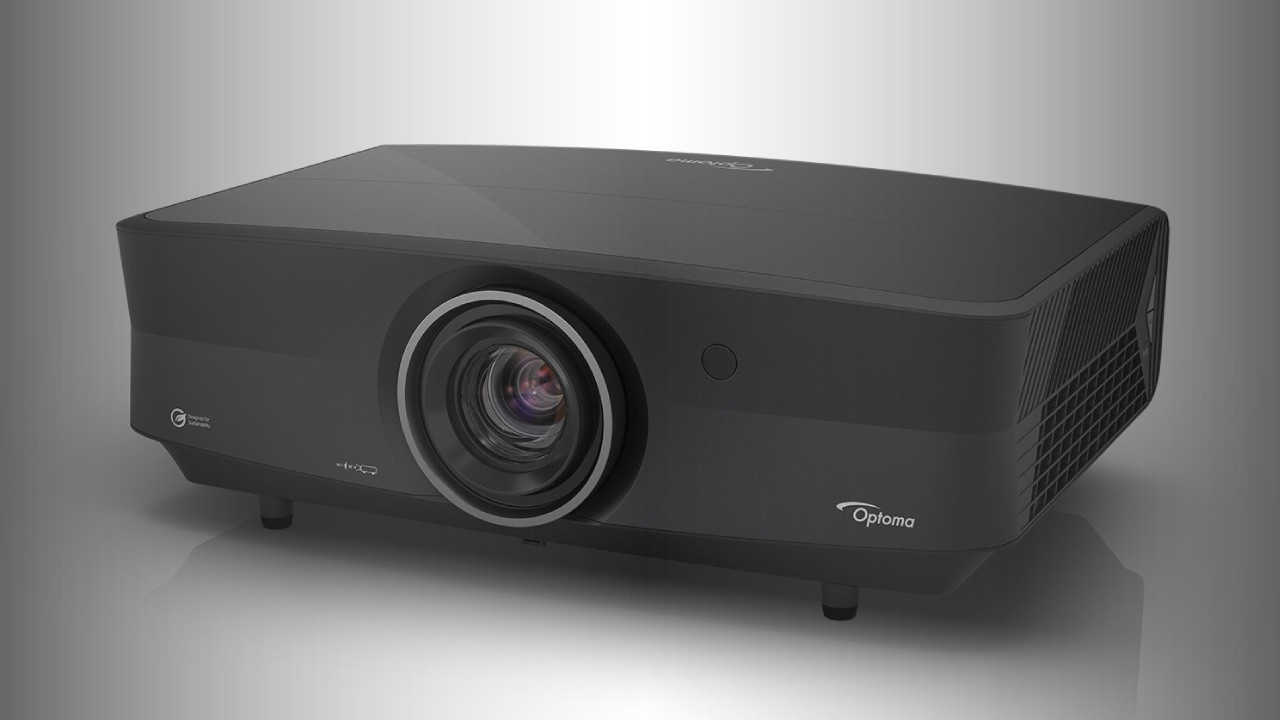
1. Optoma UHZ68LV: 4K ultra HD dual laser projector with Dolby Vision and HDR10+ support
The Optoma UHZ68LV dual-laser 4K UHD projector, designed with flexible zoom, lens-shift, and mounting options.
The Optoma UHZ68LV is a 4K UHD dual-laser projector aimed at home cinemas that need substantial light output and flexible placement.
Its specified peak brightness is 5,000 lumens, while claimed coverage reaches 90% of the DCI-P3 color space.
Dolby Vision and HDR10+ provide dynamic HDR support, and Optoma’s PureEngine Ultra processor handles motion, detail, and color processing. A 1.6x zoom, lens shift, and support for 360-degree projection make it adaptable to front, rear, or ceiling installations. It is the most display-focused option here and particularly relevant where ambient light or mounting constraints rule out a less flexible projector.
Best for: Bright rooms and flexible projector installations
- 5,000-lumen specified peak brightness
- Dolby Vision and HDR10+ support
- 1.6x zoom and lens shift
- Front, rear, ceiling, and 360-degree installation options
Verdict: The UHZ68LV combines high specified brightness, broad HDR compatibility, and useful optical adjustment for demanding home cinema installations.
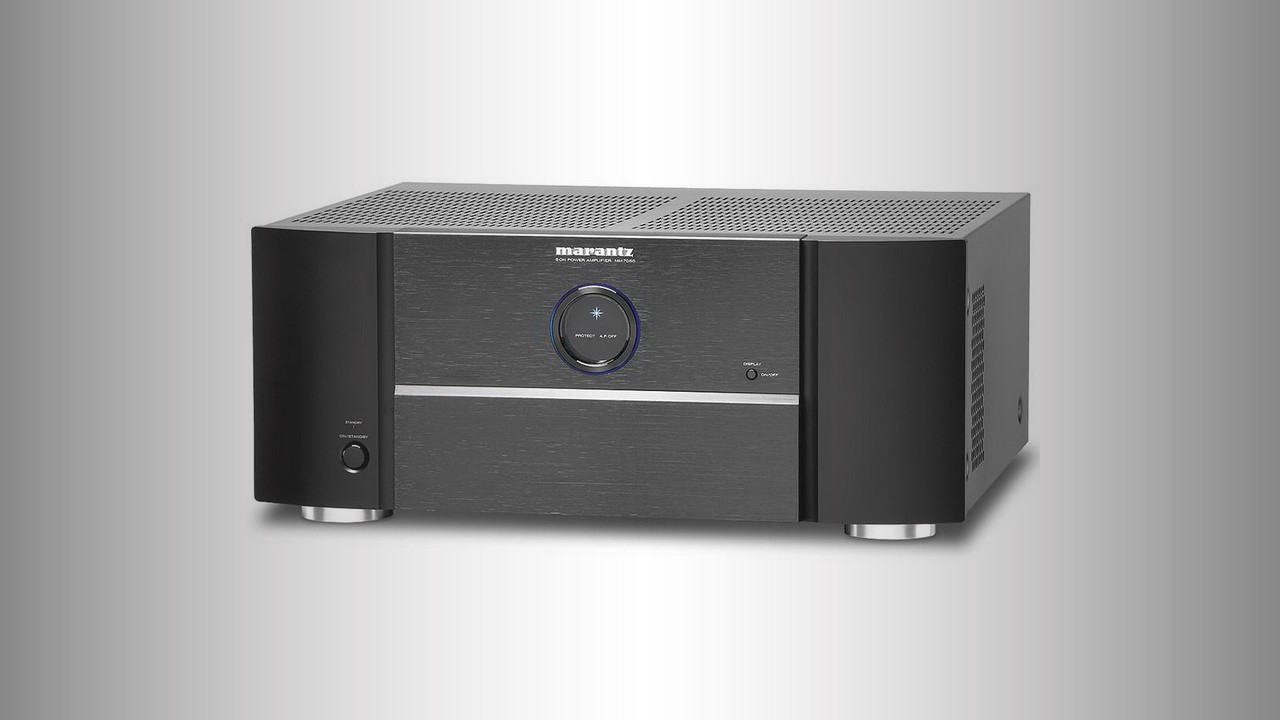
2. Marantz MM7055: Legendary multichannel amplifier
The Marantz MM7055 five-channel power amplifier for a home theater system built around separate processing and amplification.
The Marantz MM7055 is a five-channel power amplifier intended for a separates-based home theater system.
It is rated at 140 watts per channel into 8-ohm speakers and uses a current-feedback circuit derived from other Marantz amplifier designs.
Its power supply incorporates a custom transformer and two 33,000-microfarad filter capacitors, with the transformer screened to reduce electromagnetic interference. Unlike an AV receiver, this is a dedicated amplification stage, so it must be partnered with a compatible processor or receiver offering multichannel preamplifier outputs.
Best for: Systems using a separate AV processor or preamplifier
- Five channels of power amplification
- Rated at 140 watts per channel into 8 ohms
- Current-feedback circuit
- Screened custom transformer
Verdict: The MM7055 is a focused five-channel power amplifier for buyers who already have, or plan to add, suitable surround processing.

3. Zidoo unveils Z3000 PRO media player with 8K support
The aluminum Zidoo Z3000 PRO media player, featuring a front display and a concealed bay for local hard-drive storage.
The Zidoo Z3000 PRO is a local media player built around an Amlogic S928X-K processor, 8 GB of DDR4 memory, and 64 GB of integrated eMMC storage.
Its concealed drive bay accepts a hard drive with capacity up to 16 TB, making it relevant to substantial locally stored video libraries.
HDMI 2.1 output supports video up to 8K at 60 Hz, while HDR compatibility includes HDR10, HLG, HDR10+, and Dolby Vision. Dual HDMI outputs can separate video and audio, allowing 4K video to go directly to a display while HD audio is sent to an AV receiver that may not support the latest video standards.
Best for: Large local movie libraries and mixed-generation systems
- Concealed drive bay supporting up to 16 TB
- Separate HDMI outputs for audio and video
- HDR10, HDR10+, HLG, and Dolby Vision support
- 8 GB of DDR4 memory and 64 GB of eMMC storage
Verdict: The Z3000 PRO is a versatile local-media hub whose separate HDMI paths can help retain an older AV receiver while upgrading video playback.

4. Onkyo TX-L50: Slim AV receiver ideal for flat-panel HDTVs
The slim Onkyo TX-L50 AV receiver, proportioned for compact systems built around a flat-panel television and bookshelf speakers.
The Onkyo TX-L50 addresses a straightforward installation problem: fitting multichannel electronics into a compact living space.
Its slim chassis contains six Class D amplifier channels and is rated at 80 watts into 4 ohms.
HDMI connections support 4K video at 60 Hz, HDR, and HDCP 2.2, while AccuEQ provides speaker calibration. Wi-Fi, Bluetooth, AirPlay, network playback, USB audio, and app control broaden its source options. Its compact form and feature set make it better suited to a modest bookshelf-speaker system than to a highly expanded immersive theater.
Best for: Compact multichannel systems with limited equipment space
- Space-saving slim chassis
- 4K 60 Hz and HDR HDMI support
- AccuEQ speaker calibration
- Wi-Fi, Bluetooth, AirPlay, USB, and network playback
Verdict: The TX-L50 packages surround amplification, calibration, and network playback into a slim format for smaller home cinema installations.
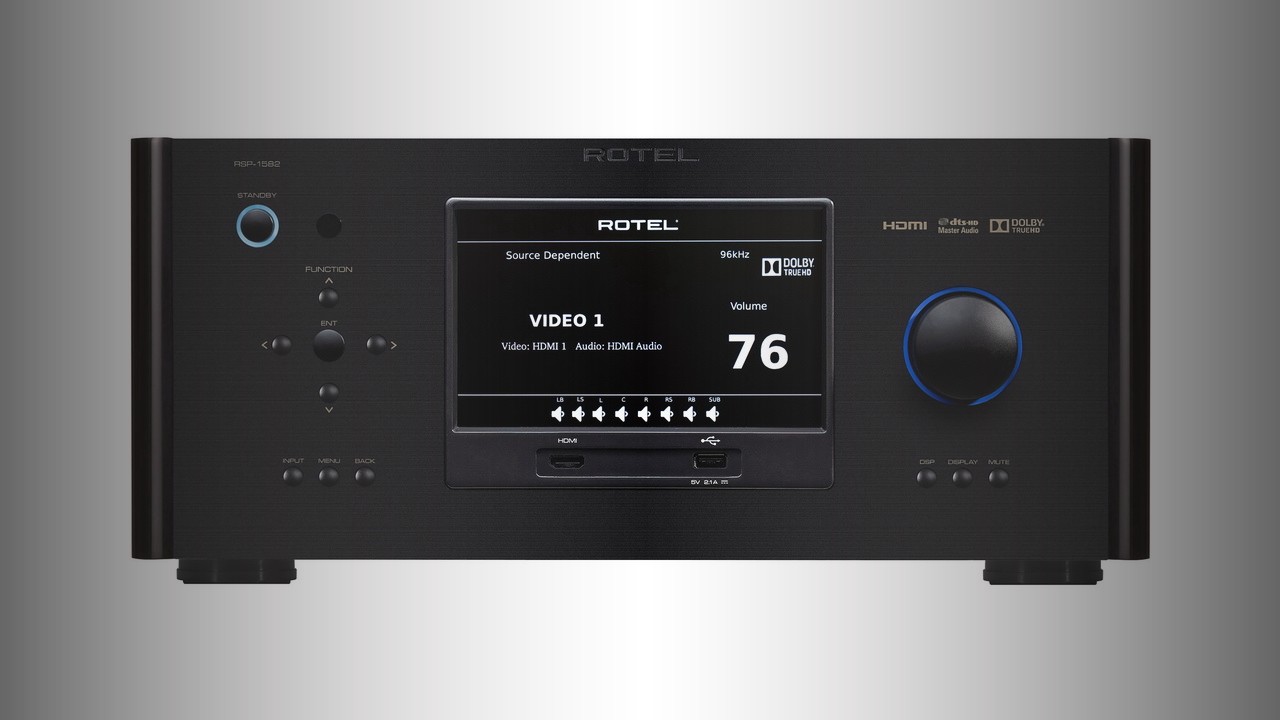
5. Rotel RSP 1582: Carefully designed AV processor
The Rotel RSP-1582 AV processor with its central seven-inch display for setup and source information.
The Rotel RSP-1582 is an AV processor rather than an integrated receiver, so external power amplifiers are required.
Its central 7-inch TFT display allows audio and video settings to be adjusted without turning on the main screen.
Six Wolfson WM8740 24-bit/192 kHz DACs serve the main channels, while a Texas Instruments signal processor provides a 10-band parametric equalizer for multichannel material. Dolby TrueHD and DTS-HD Master Audio are supported, but the supplied material states that Dolby Atmos and DTS:X were not supported at that stage. That limitation should be checked carefully against the intended speaker layout before purchase.
Best for: Separates systems that do not require confirmed immersive-audio decoding
- Seven-inch front-panel setup display
- Six Wolfson WM8740 DACs
- Ten-band parametric equalizer
- Front HDMI input with 4K video pass-through
Verdict: The RSP-1582 offers substantial processing hardware and convenient front-panel control, but its stated format limitations demand careful compatibility checking.
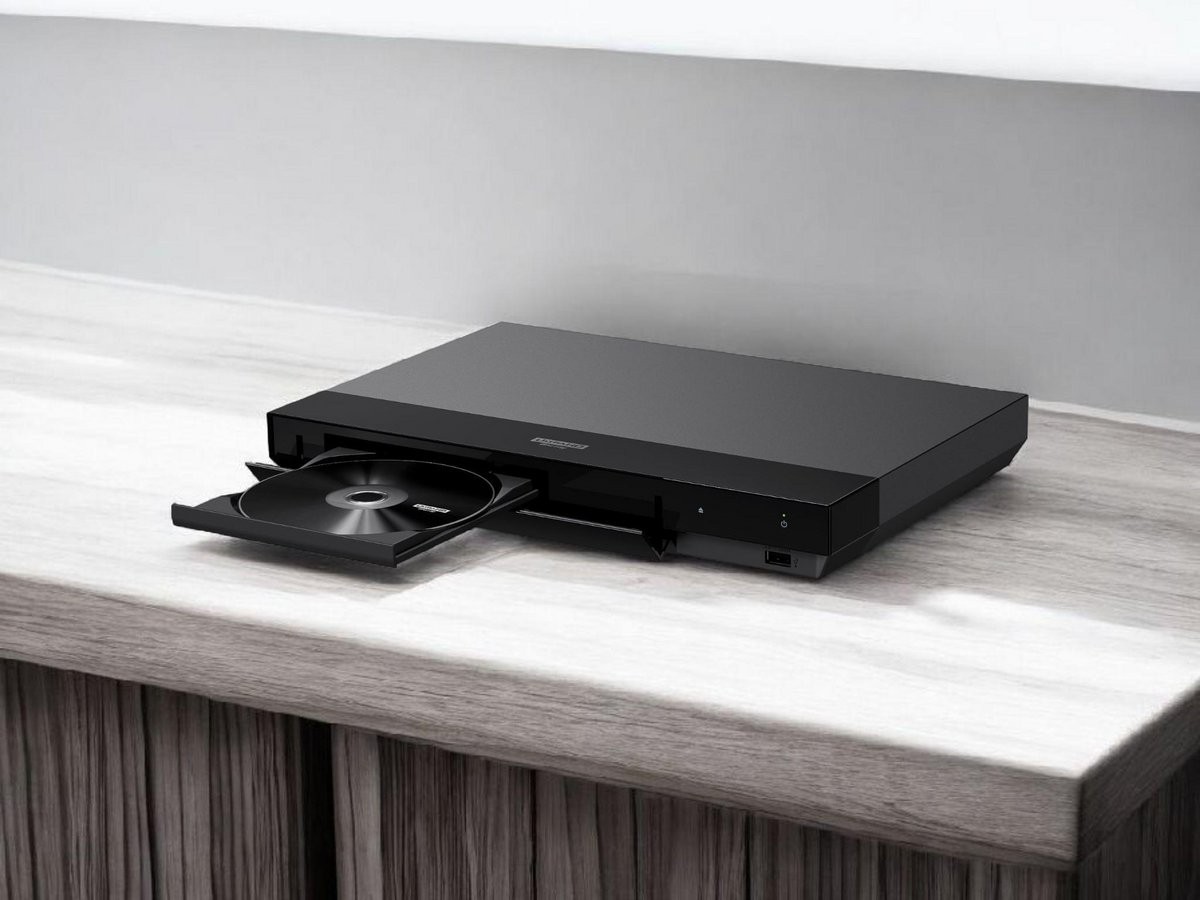
6. Sony launches a simpler version of the UBP-X700 UHD Blu-ray player
The Sony UBP-X700/K UHD Blu-ray player, a simplified physical-media source with separate HDMI video and audio connections.
The Sony UBP-X700/K concentrates on physical media playback after removing several networking and streaming functions found on the original version.
It plays UHD Blu-ray, standard Blu-ray, and DVD, with HDR10 and Dolby Vision video support plus Dolby Atmos and DTS:X audio compatibility.
Two HDMI outputs are retained, including a dedicated audio connection that can help integrate a newer television with an AV receiver that cannot pass the required video format. Buyers should not treat it as an all-purpose streaming box: support for major streaming apps, Spotify Connect, screen mirroring, and the Video & TV SideView app has been removed.
Best for: Physical-media viewers who do not need built-in streaming apps
- UHD Blu-ray, Blu-ray, and DVD playback
- HDR10 and Dolby Vision support
- Dolby Atmos and DTS:X compatibility
- Separate HDMI audio output
Verdict: The UBP-X700/K is a focused disc player with useful HDR and dual-HDMI support, provided its reduced network features match the intended use.

7. JBL Synthesis Unveils Massive Home Theater Lineup at ISE
Components from the expanded JBL Synthesis home theater range, covering custom-install speakers, electronics, and bass support.
This JBL Synthesis announcement covers an ecosystem rather than a single component.
The expansion comprises four in-wall speakers, four freestanding speakers, two AV processors, one AV receiver, and one subwoofer, alongside custom-install models intended to work together in larger systems.
Four new in-wall and in-ceiling speakers are timbre-matched for front, surround, or immersive duties. The flagship SCL-2XL in-wall model uses four 8-inch woofers and a compression driver and is positioned for front left, center, and right channels in large or extra-large theaters. The breadth is appealing for a professionally planned room, but individual model requirements must be assessed separately.
Best for: Professionally planned custom-install theaters
- Broad range of speakers and electronics
- Timbre-matched in-wall and in-ceiling models
- Options for front, surround, and immersive channels
- SCL-2XL designed for large-room front-channel use
Verdict: The expanded JBL Synthesis range provides a coordinated route to a large custom theater rather than a simple single-box upgrade.

8. Marantz Cinema 60 DAB: Advanced 7.1-channel surround receiver
The Marantz Cinema 60 DAB AV receiver, identified by its circular display and clean front-panel design.
The Marantz Cinema 60 DAB is a 7.1-channel AV receiver rated at 100 watts and positioned as a control center for systems that will not expand beyond seven channels.
It combines home cinema duties with DAB+/FM radio and networked music features including HEOS, Spotify Connect, and AirPlay 2.
Two-way Bluetooth allows compatible wireless headphones to be used with the receiver. Its distinctive front panel carries the round Marantz display and a restrained control layout, making it one of the options here that explicitly addresses both system functionality and living-room presentation.
Best for: Seven-channel systems balancing movies, radio, and music streaming
- 7.1-channel configuration
- Built-in DAB+ and FM radio
- HEOS, Spotify Connect, and AirPlay 2
- Two-way Bluetooth headphone support
Verdict: The Cinema 60 DAB is a well-connected seven-channel hub for buyers who also value integrated radio and wireless music playback.

9. Denon AVC-X3700H: Designed to take your home theater experience to the next level
The Denon AVC-X3700H nine-channel AV receiver, capable of powering a 7.2.2 layout or processing a 7.2.4 system with external amplification.
The Denon AVC-X3700H provides nine discrete amplifier channels and 9.2-channel processing, allowing a 7.2.2 system to run from the receiver alone.
Adding an external stereo power amplifier permits expansion to 7.2.4.
Dolby Atmos, DTS:X, IMAX Enhanced, Dolby Atmos Height Virtualization, and DTS Virtual:X cover both speaker-based and virtualized immersive playback. Seven HDMI inputs are provided, with one dedicated 8K-capable input, while two HDMI outputs can carry 8K video. Support also includes 4K at up to 120 Hz, HDR10+, and Dynamic HDR, making this the more expansion-oriented Denon receiver in the selection.
Best for: Immersive systems requiring nine channels or a path to 7.2.4
- Nine discrete amplifier channels
- Expandable from 7.2.2 to 7.2.4 with external amplification
- Dolby Atmos, DTS:X, and IMAX Enhanced
- 8K and 4K 120 Hz video support
Verdict: The AVC-X3700H offers a strong combination of channel capacity, immersive decoding, and advanced video handling for an expandable theater.

10. Denon AVR-X1800H: Fully equipped AV receiver
The Denon AVR-X1800H 7.2-channel AV receiver, equipped for a 5.2.2 immersive speaker system and Audyssey calibration.
The Denon AVR-X1800H is a 7.2-channel receiver with seven built-in power amplifiers.
It can form a 5.2.2 Dolby Atmos or DTS:X layout, while Dolby Atmos Height Virtualization and DTS Virtual:X offer simulated height effects when physical height speakers are impractical.
Audyssey MultEQ XT uses the supplied microphone to measure several listening positions and adjust the system for more consistent room response. Six HDMI inputs and one output support video transmission up to 8K, giving it a useful combination of contemporary video connectivity and manageable channel capacity for a mainstream room.
Best for: Straightforward 5.2.2 or seven-channel home cinemas
- 5.2.2 Dolby Atmos and DTS:X capability
- Virtual height-channel processing
- Audyssey MultEQ XT room calibration
- Six HDMI inputs with video support up to 8K
Verdict: The AVR-X1800H is a practical receiver for buyers who want room correction and immersive audio without moving to a nine-channel platform.
Frequently asked questions
Should I choose an AV receiver or separate processing and power amplification?
An AV receiver combines processing, source switching, and amplification in one chassis, making models such as the Denon AVR-X1800H or Marantz Cinema 60 DAB simpler to install.
A processor such as the Rotel RSP-1582 needs external power amplifiers, while the Marantz MM7055 supplies amplification but no surround processing.
Separates are therefore appropriate only when the required connections, channel allocation, and system budget have been planned together.
How many amplifier channels does an immersive home cinema need?
A 5.2.2 layout requires seven amplified channels, which suits a receiver such as the Denon AVR-X1800H.
A 7.2.2 system requires nine channels, as provided by the Denon AVC-X3700H, while its 7.2.4 option needs an additional stereo power amplifier.
Count every ear-level and height speaker before choosing; powered subwoofers do not use the receiver’s speaker-amplifier channels.
Why are separate HDMI audio and video outputs useful?
Dual HDMI outputs on sources such as the Zidoo Z3000 PRO and Sony UBP-X700/K can send video directly to a modern display while routing audio separately to an older AV receiver.
This may preserve lossless or immersive audio playback without requiring the receiver to pass the newest video signal, but both source setup and receiver format support still need to be confirmed.
What should I check before buying a home cinema projector?
Consider room light, screen position, throw distance, and mounting location before focusing on resolution alone.
The Optoma UHZ68LV provides a specified 5,000-lumen peak output, 1.6x zoom, lens shift, and several mounting orientations, but those features still need to be matched to the room geometry and intended screen.
Plan the system before choosing the hardware
Begin with the room and speaker layout rather than a feature checklist.
A compact installation may be served well by the slim Onkyo TX-L50, while a conventional immersive system can be built around the seven-channel Denon AVR-X1800H.
Buyers planning nine amplified channels or eventual 7.2.4 processing should look more closely at the Denon AVC-X3700H. A separates route involving the Rotel RSP-1582 or Marantz MM7055 requires more deliberate compatibility planning because processing and amplification are divided between components. Source choice matters just as much. The Sony UBP-X700/K is designed around discs and intentionally omits several streaming functions. The Zidoo Z3000 PRO instead emphasizes local file storage, broad HDR support, and separate HDMI paths. Neither is automatically the better option; the decision depends on whether the library is stored on optical discs or hard drives. For projection, confirm throw distance, mounting position, ambient light, and screen requirements before purchase. For receivers and processors, count the required channels, inspect HDMI specifications, and verify every surround format you intend to use. The Rotel processor’s stated lack of Dolby Atmos and DTS:X support is a reminder that premium construction does not guarantee compatibility with every modern layout. Careful system mapping is the most reliable way to identify the component that solves an actual need rather than merely adding unused features.

Join the discussion
Share your thoughts, listening impressions or product experience.