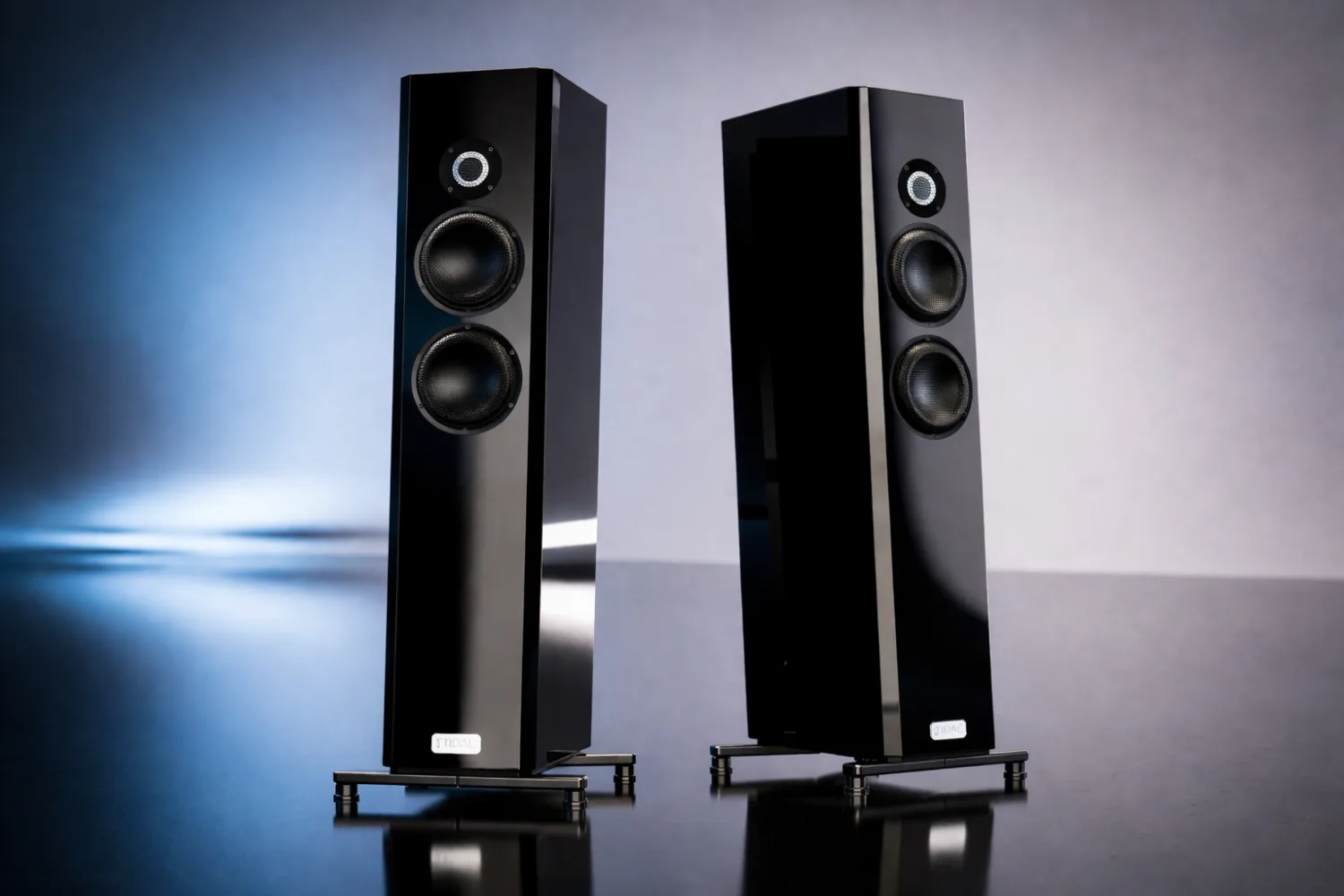
German high-end manufacturer Tidal Audio is revisiting its origins with the introduction of a new entry-level loudspeaker, the Tidal Piano Classic. While details remain deliberately scarce, the announcement carries significant weight for a brand that has long positioned itself at the very summit of high-end audio.
Founded in 1999, Tidal Audio began its journey with a single loudspeaker model — the original Piano. From that starting point, the company has evolved into one of the most respected names in ultra-high-end audio, known for its uncompromising engineering, meticulous craftsmanship, and unmistakable sonic signature. Over the years, its portfolio has expanded into a range of ambitious floorstanding loudspeakers and electronics, often pushing the boundaries of both performance and price.
Now, more than two decades later, Tidal appears to be closing the circle.

A Return to Simplicity — Without Compromise
The new Piano Classic is positioned as an entry point into the Tidal ecosystem, but the term “entry-level” should be understood in the context of the brand’s philosophy rather than conventional market standards. Tidal has built its reputation on a strict refusal to compromise, and that ethos remains intact here.
What makes the Piano Classic particularly interesting is its deliberate shift away from some of the brand’s most extravagant technologies. Unlike Tidal’s flagship designs, the new model does not employ diamond or ceramic drivers, avoids the extensive use of stainless steel components, and omits the highly complex poly-shell enclosures that have become a hallmark of its upper-tier offerings.
Instead, the Piano Classic embraces a more restrained, purist approach — one that echoes the spirit of the original Tidal Piano from 1999.
Yet this is not a step backwards. According to the manufacturer, the new design benefits from everything Tidal has learned over the past 25 years. Materials, crossover design, cabinet construction, and overall voicing have all been refined using the company’s accumulated expertise. The result is intended to deliver the core Tidal experience in a more accessible and distilled form.

The Tidal DNA, Reimagined
At its core, the Piano Classic is said to carry the full genetic imprint of the brand. That means a focus on tonal purity, coherence, and an emotional connection to music — qualities that have long defined Tidal’s house sound.
The company’s philosophy, often summarized as “we create emotions,” is central to this new release. Rather than chasing specifications alone, Tidal’s approach has always emphasized musical realism and engagement. The Piano Classic is designed as an invitation into that world — a speaker that prioritizes the essence of listening over technical excess.
This positioning could make the Piano Classic one of the most intriguing launches from Tidal in recent years, particularly for listeners who have admired the brand from a distance but found its flagship models financially out of reach.
A Strategic Shift for a New Audience
While Tidal Audio has never been a brand associated with accessibility, the introduction of the Piano Classic suggests a subtle but meaningful shift. By simplifying certain aspects of construction while retaining its core identity, the company appears to be opening the door to a broader audience — without diluting what makes a Tidal product unique.

It is a delicate balance. High-end brands rarely move “downmarket” without risking their exclusivity, but Tidal’s framing of the Piano Classic as a return to its roots gives the move a sense of authenticity rather than compromise.
Availability and Expectations
At the time of writing, Tidal Audio has yet to release detailed technical specifications, pricing, or delivery timelines for the Piano Classic. The limited information and restrained communication suggest that this is a carefully staged introduction, with more to be revealed in the coming months.
Even so, the message is clear: the Piano Classic is not just another product launch, but a symbolic moment for the brand — a reconnection with its origins, reinterpreted through decades of experience at the highest level of audio design.
For audiophiles, this is a development worth watching closely.